
Hood Athletic Edge
Hockey In Season Training: How to Keep Your Speed Without Burning Out
Most hockey players start October feeling like a rocket and end January feeling like a tank. Here is how to maintain top-end speed and joint health all season long.
Every hockey player knows the feeling. You come out of the summer feeling light, fast, and explosive. Your stride feels effortless, your hips feel open, and you have zero doubt when you step on the ice for game one. Fast-forward eight weeks into the schedule. Your groin is tight every morning. Your hips feel like rusted hinges. You step out for a third-period shift and your legs feel heavy, like you are skating through wet cement. That steady decline is not an inevitable consequence of playing junior, college, or pro hockey. It is what happens when your approach to hockey in season training is completely broken.
Most players treat the winter in one of two ways. Either they stop training off-ice altogether because they are scared of being sore for games, or they keep running their aggressive summer off-season lifting program and bury their central nervous system under fatigue debt. Both mistakes lead to the exact same result: lost speed, locked joints, and a body you spend all game day trying to negotiate with.
The Real Mistake in Hockey In Season Training
The biggest misconception in hockey training is that in-season work is strictly about maintaining gym numbers. Nobody wins a championship because their bench press or back squat stayed high in February. You win because your top speed, your first three steps, and your ability to absorb contact and win puck battles remain razor sharp when games matter most.
When you skate four to six times a week, your body adapts specifically to the demands of skating. Skating forces you into repetitive hip flexion, heavy adductor loading, and continuous internal rotation torque. Over months of competition, your body naturally tightens down around those repetitive mechanics to protect itself. Your hip capsules lose rotational clearance. Your ankles lose dorsiflexion. Your hip flexors lock up, which directly shuts down your glutes’ ability to produce force into hip extension.
When you lose range at a joint, your brain does something very smart and very frustrating: it puts the brakes on your speed. You cannot produce maximum force through ranges of motion your nervous system no longer controls. If you simply try to lift heavy through locked, restricted joints, you are not building power—you are loading dysfunction and asking for an adductor pull or lower back irritation.
Why Speed Disappears Mid-Season (And What to Do About It)
Speed is not just raw muscle strength. Speed is usable joint range paired with high neural intent and healthy, springy connective tissue. When players say, ‘I feel like I lost my first step,’ what usually happened is simple:
- Lost hip rotation: The hip is a ball-and-socket joint. Rotation is the prerequisite for all non-rotational movements like skating stride extension and recovery. When you lose internal or external rotation, your stride shortens, and your adductors take the hit.
- Tendon and joint fatigue: High-volume lifting creates muscular soreness and structural fatigue that drains explosive reactivity off the ice.
- Zero true high-velocity stimulus: If the only fast thing you do all week is skate, your body never gets the clean, unloaded speed stimulus needed to keep your fast-twitch motor units firing.
If you want to keep your top-end speed in February and March, your in-season training has to accomplish three specific objectives: preserve joint space, stimulate high-velocity movement with minimal volume, and down-regulate the nervous system after competition so you actually recover.
The Three Rules of In-Season Performance
1. Joint Hygiene Comes Before Iron
You cannot afford to spend an hour doing generic foam rolling or passive stretching that changes sensation without changing capacity. You need active joint control. Controlled Articular Rotations (CARs) for the hips, ankles, and spine should be done daily. They cost almost zero recovery energy, circulate synovial fluid, and give you an immediate honest assessment of where your movement stands that day.
Before you skate or lift, use short activation isometrics—holding end-range positions at roughly 30% effort for 20 to 30 seconds. That tells your nervous system which tissue to recruit without creating any fatigue. After games, use low-intensity isometrics (20% to 30% effort) combined with light bike flushes to down-regulate muscle tone and promote connective tissue recovery.
2. High Intent, Low Volume in the Gym
In-season strength sessions should look nothing like a summer hypertrophy block. You do not need four sets of ten reps that leave your quads trembling for two days. You need two to three sets of three to five reps, performed with maximum bar speed and high intent, leaving two to three reps in reserve on every set.
Focus on multi-joint compound movements that train hip extension, single-leg stability, and rotational stiffness: trap bar deadlifts, rear-foot elevated split squats, sled pushes, and medicine ball throws. When you keep volume low, you get the neural benefits of heavy, fast work without the delayed onset muscle soreness that slows your skating stride.
3. Earn Your Readiness
A good in-season plan works with your schedule, not against it. You do not schedule your hardest lower-body session the day before a road double-header. You train hard when you have a 48-to-72-hour window before your next high-stress game, or you perform a short, high-quality lift immediately post-game while your nervous system is already awake, giving you the following day completely free for recovery.
A Sample In-Season Weekly Schedule (Two-Game Weekend)
Here is how a high-performing hockey player structures their physical work across a standard Friday/Saturday game week:
- Monday (High Joint Capacity & Recovery): Morning daily CARs routine. Low-impact flush on the bike. Focused hip rebuilding work to restore whatever internal rotation or adductor length was lost over the weekend games.
- Tuesday (Primary Strength & Power): 40 to 45 minutes max. Dynamic warm-up, trap bar deadlift or heavy split squat (3 sets of 3-4 reps, moving fast), medicine ball rotational slams, and end-range isometric hip control. Done.
- Wednesday (On-Ice Practice & Upper Body / Trunk): Focus on upper body pulling, shoulder joint prep, and anti-rotational core strength. Total gym time: 30 minutes.
- Thursday (Speed Priming): Light neural activation. 2 to 3 sets of short broad jumps or lateral bounds, ankle dorsiflexion priming, and full hip CARs. You should feel faster leaving the gym than when you walked in.
- Friday & Saturday (Game Days): Pre-skate activation routine (20-30 second low-effort isometrics for hips and ankles). Post-game: 10-minute flush ride and low-intensity recovery isometrics to settle the nervous system.
- Sunday (Complete Down-Regulation): Rest, light walking, full-body CARs.
Peak in the Playoffs, Don’t Just Survive
Your season should not feel like a slow march toward physical breakdown. When you manage your joints properly and train with high intent and low volume, you do not just survive until the playoffs—you actually get stronger, more mobile, and faster as the winter goes on.
Stop guessing what your body needs after every hard weekend. Stop waiting for your groin or your hips to tell you something is wrong before you address how your joints move.
If you want a structured, step-by-step system built specifically around the demands of the competitive hockey calendar—complete with exact lifting sessions, joint prep routines, and daily recovery protocols—explore our complete in-season training options.
In their own words
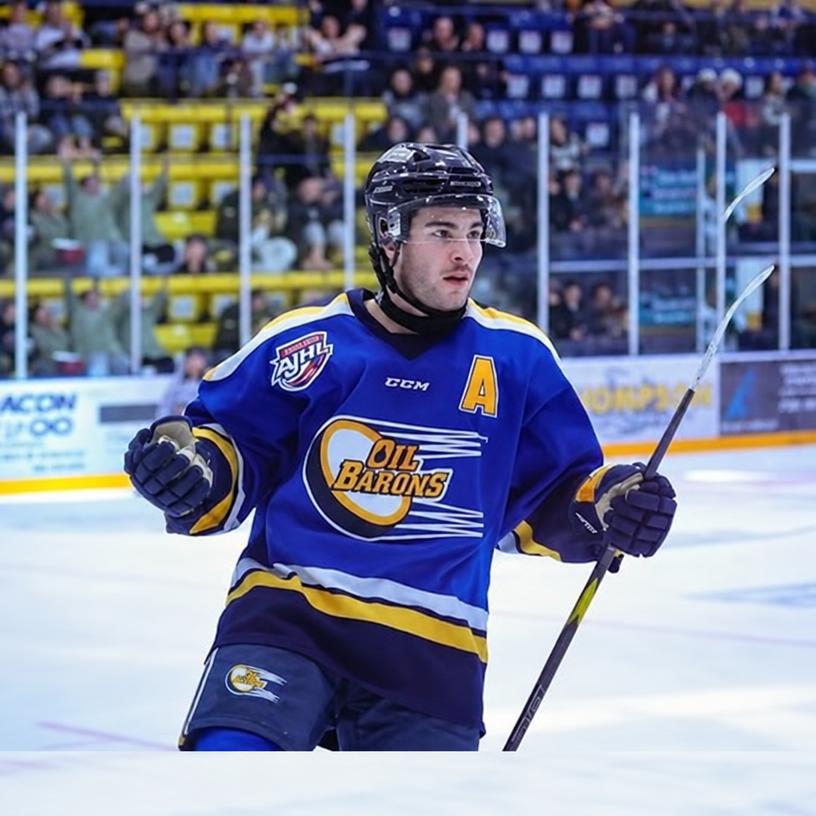
“I’ve been training with Hooder for the last 5 seasons and over that time he has helped me focus on the mobility side of training. I have felt a big improvement in my game. His training has helped me build more strength, improve my top end speed, and become a more mobile player. As a hockey player, those things make a huge difference on the ice. His training has a huge impact on my game. There is purpose behind everything we do and how it translates to the ice. I’ve really appreciated the impact it’s had on my development.”
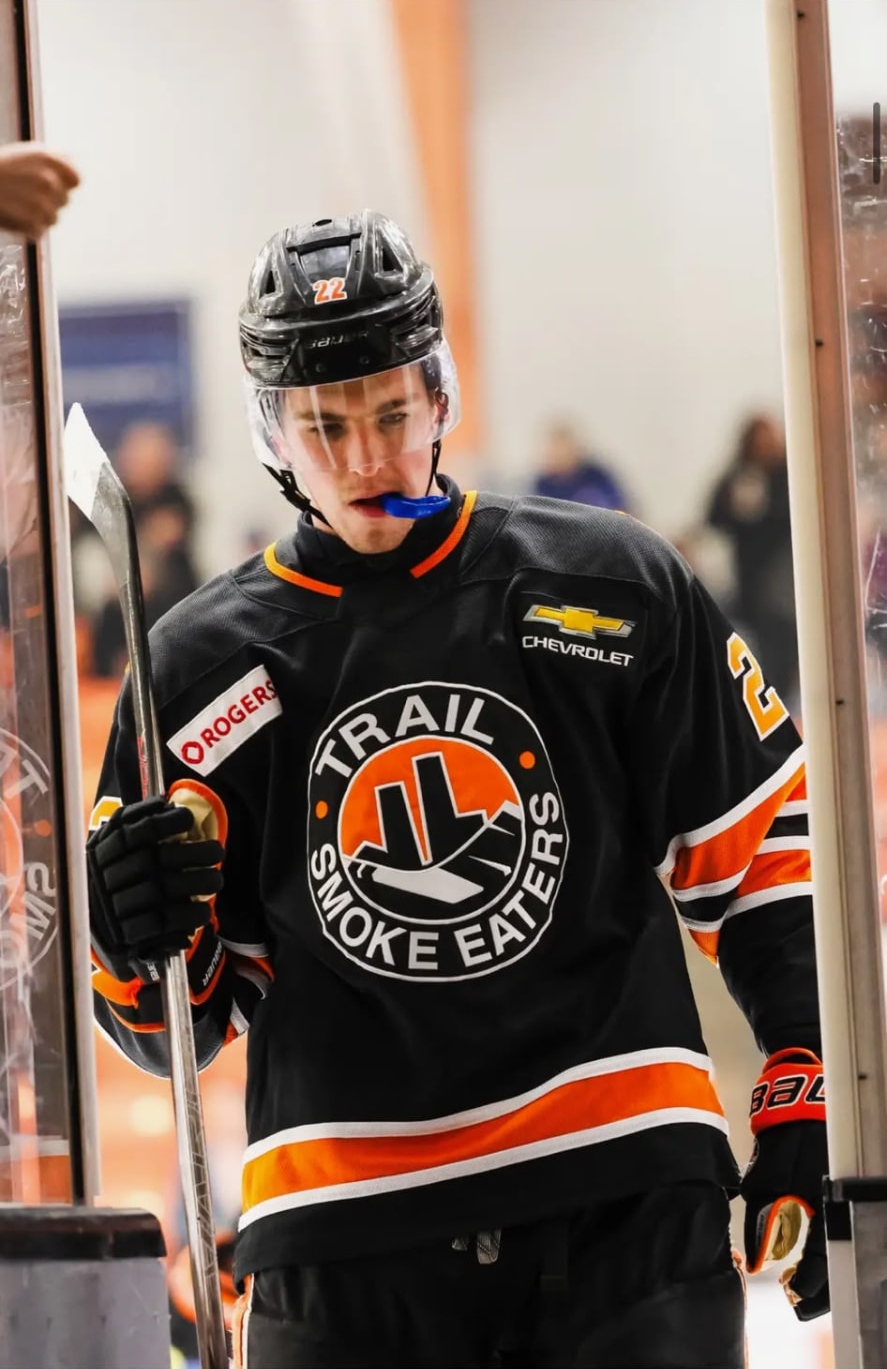
“Absolutely love training with Hooder, he taught me more in a couple of sessions then my last trainer did in years. He genuinely cares about helping you improve and takes the time to make sure you get the most out of every session. His style of mobility training has been an absolute game changer for my hips and overall skating.”
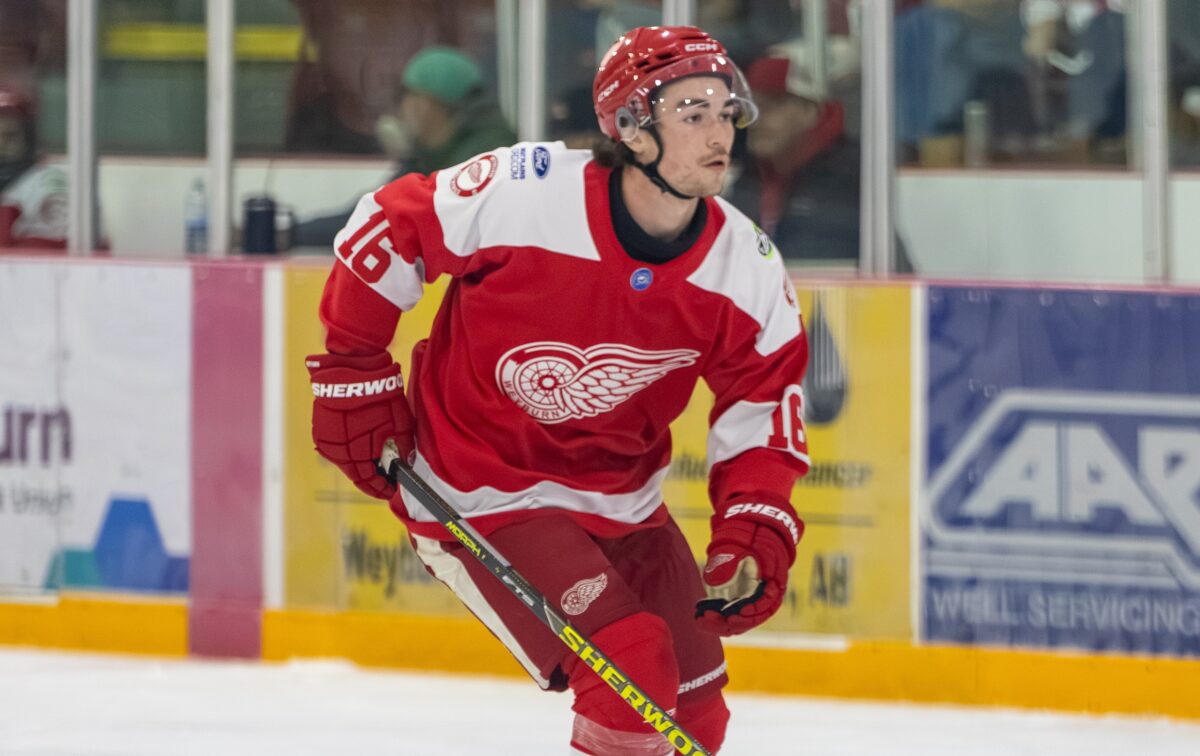
“Training with Hooder was an awesome experience. His knowledge of hockey focused mobility is incredible, and I learned so much from him that has helped me better understand my body, improve my movement, and become a better athlete.”
Individual experiences working with Dylan. Photos may show an earlier team; these accounts are not promises of results from a specific online program.