
Hood Athletic Edge
What Hockey Mobility Training Actually Is (And Why Your Stretching Isn’t Working)
If you want to move like an athlete again, you need to train like one — and that means your mobility work needs to do more than just make you feel loose for twenty minutes.
Your Body Shouldn’t Be a Full-Time Job
Did you spend your entire game day preparing to play hockey, or did you spend it trying to convince your body to let you? If you’re foam rolling, stretching, and doing activation drills for hours just to feel ready, you’re not alone. I’ve been there. The anxiety of not knowing if your body will cooperate is sometimes worse than the physical limitation itself.
For years, this was my reality. But here’s the thing: that’s not a sustainable way to play hockey, and it’s definitely not a performance plan. This is where real hockey mobility training comes in. It’s not about finding a magic stretch or a 15-minute routine that promises to fix everything. It’s about building a body you can actually trust, so you can stop negotiating with it and just go play the game.
The truth is, most of what passes for “mobility” online is a parlour trick. It’s designed to make you feel different for a few minutes, not to help you become different. Accessing a range in a passive stretch is not the same as owning that range. And if you don’t own it, you can’t use it on the ice.
Why Your Current ‘Mobility’ Isn’t Working
If you feel like you’re spinning your wheels with your mobility work, you’re probably right. Most athletes are doing one of two things: static stretching or low-effort mobility “flows.”
Static stretching gives you a temporary increase in range by creating slack in the nervous system. It feels good, but it doesn’t build anything. Ten minutes later, your body takes that slack right back out, because you never proved you could control it. That’s why your “tight” hips are still tight, year after year.
Those follow-along mobility flows aren’t much better. They might feel like work, but they rarely have the focused intensity to signal real adaptation. Your body is extremely efficient; it’s not going to waste resources building a stronger, more resilient joint unless you give it a compelling reason to. Waving your limbs around isn’t a compelling reason.
Feeling different is not the same as being different. The goal of real mobility training isn’t temporary relief. It’s greater ownership.
Real hockey mobility training is about creating permanent, usable change. It’s strength training for your joints.
The Goal: From Limited to More Options
So what are we training for? It’s not to become a gymnast. It’s to give yourself more options on the ice.
- That extra inch of hip internal rotation that lets you get lower in your stride and create more power.
- The ankle dorsiflexion that keeps your blade on the ice longer during a tight turn.
- The thoracic rotation to get a harder shot off from anywhere.
- The ability to absorb a hit and stay on your feet because your hips and core are locked in.
Whatever your brain wants to do on the ice, your body should be able to accomplish the task. That’s the North Star. Mobility isn’t a separate category from performance—it is the foundation of it. Confidence in movement comes from capacity.
A Smarter System: Assess, Rebuild, Bulletproof
So how do we build that capacity? We stop guessing and start being systematic. My entire approach is built on the principles of Functional Range Conditioning (FRC), which gives us a logical path forward.
1. Assess, Don’t Guess (Daily Joint Control)
Before you do anything else, you need to know what you’re working with. The primary tool for this is the Controlled Articular Rotation, or CARs. This is a slow, deliberate rotation of a joint through its greatest pain-free range of motion. It’s not a warm-up; it’s a daily scan. Where is the restriction? Is there a clicking sound? A pinching sensation? Is the left side dramatically different from the right? CARs give you the data. They tell you what your body needs today.
2. Rebuild and Expand Your Map (PAILs/RAILs)
Once you’ve identified a limitation (like a block in your hip rotation), you can go to work on it. This is where we need intensity. PAILs (Progressive Angular Isometric Loading) and RAILs (Regressive Angular Isometric Loading) are a way to strength train your tissues at their end range. You use high-effort isometric contractions to convince your nervous system that you are strong and safe in that position, which in turn grants you more access to it. This is how you actually *earn* new, usable range of motion.
3. Make It Resilient (Bulletproofing)
Having new range is great, but if you can’t control it, it’s a liability. Bulletproofing is about building active control and strength through your entire range, especially at the end. This involves things like end-range lift-offs and hovers, where you are forced to use your own muscular power to hold a position without any passive assistance. This is what makes the new range stick. This is what turns a fragile position into a powerful one.
Talk is cheap. Here’s a simple routine targeting the hips, a chronic problem area for hockey players. Don’t just go through the motions—focus on the intent.
Stop Guessing. Start Building.
This is what it takes. It’s not about quick fixes; it’s about a systematic process of understanding your body, giving it the right stimulus, and earning the right to ask more of it. It’s the process that took me from being warned about hip replacements in my twenties to playing the best hockey of my career in my thirties.
You can absolutely piece this together yourself. But if you’re tired of guessing and want a guided system that tells you exactly what to do and when, that’s what I built the Hockey Mobility Membership for.
It’s not just a library of workouts. It’s the entire system—Joint Prep, Joint Control, Rebuilding, Bulletproofing, and Recovery—with coached videos for every session, so you know you’re doing it right. It’s the system I wish I had a decade ago.
Your body should not be the thing that holds you back. Build a body you trust, and get back to just playing the game.
In their own words

“Training with Dylan helped me access ranges of motion I didn’t even know I had — and more importantly, add strength to those end ranges. His attention to detail and depth of knowledge has helped me become a stronger, more resilient athlete and reduce injury risk. I’ve seen huge improvements toward my personal goals.”
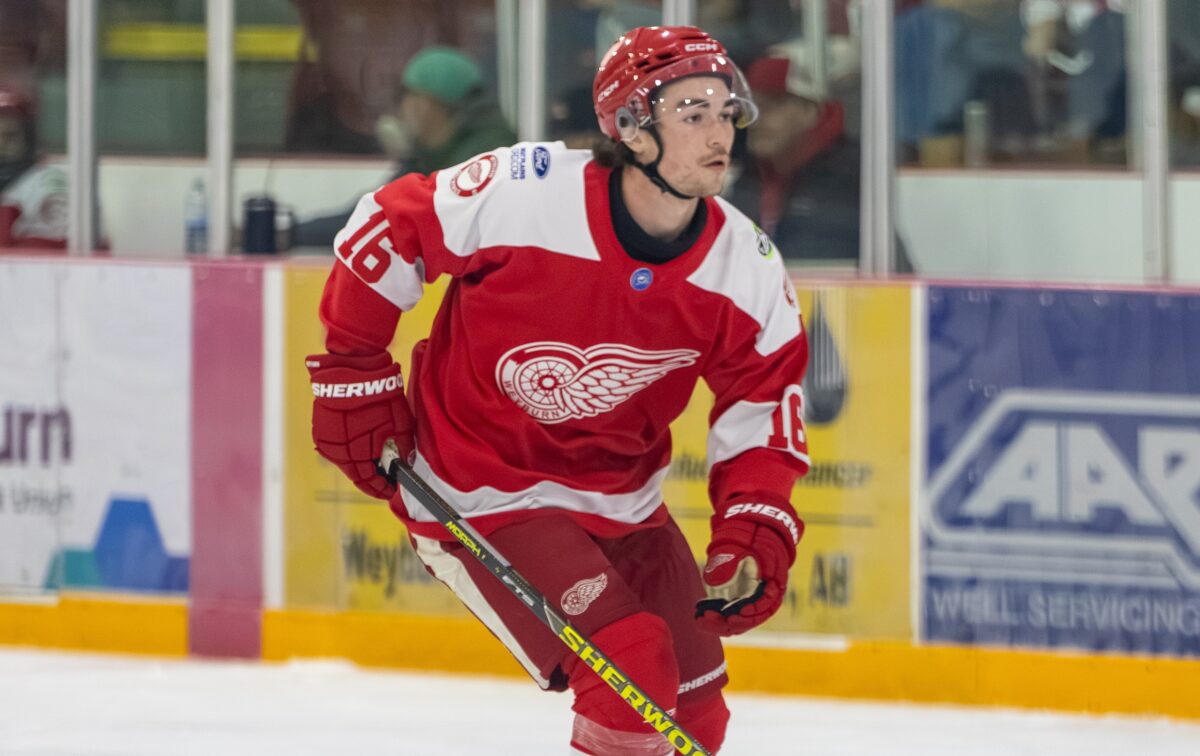
“Training with Hooder was an awesome experience. His knowledge of hockey focused mobility is incredible, and I learned so much from him that has helped me better understand my body, improve my movement, and become a better athlete.”
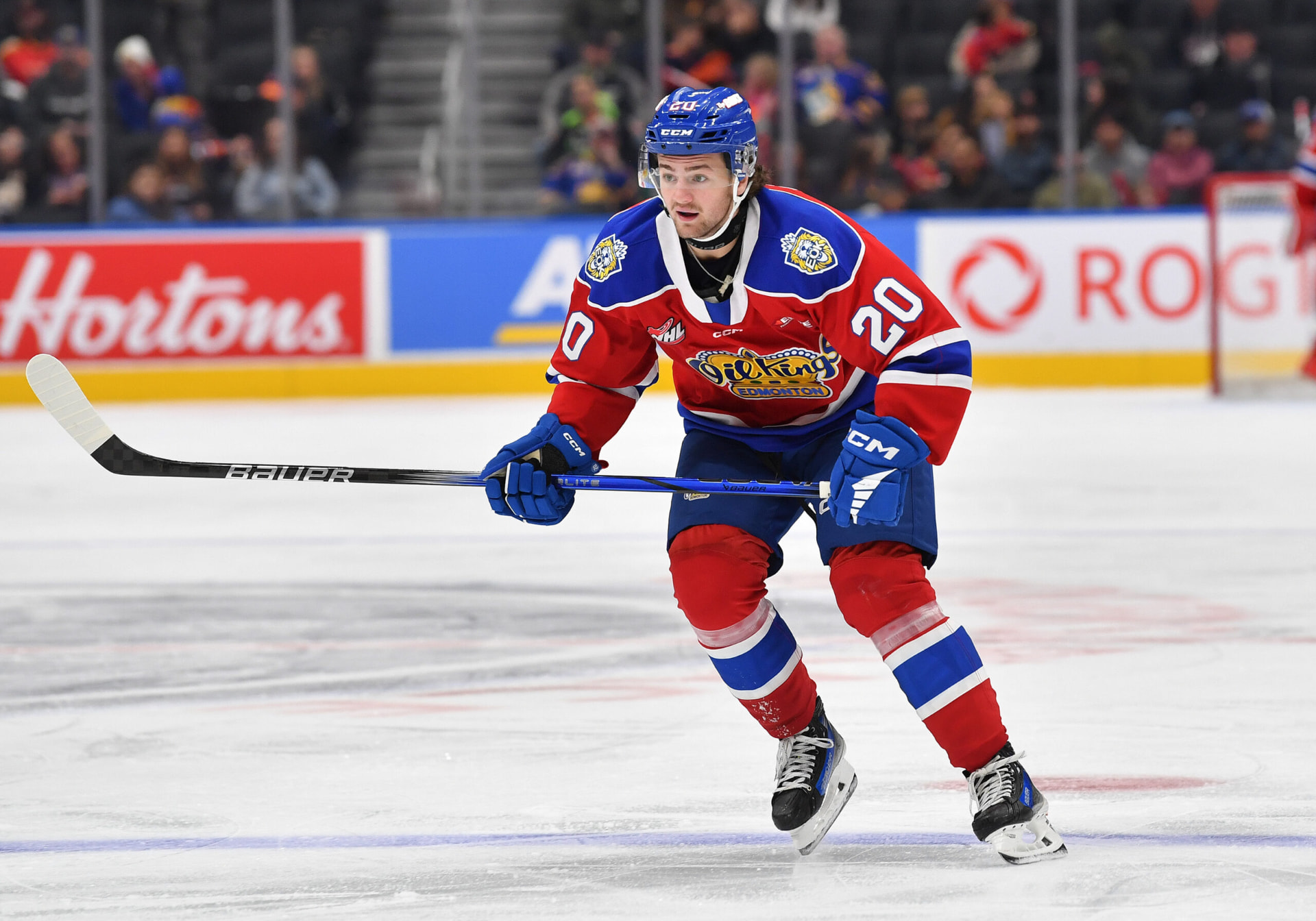
“I’ve been working with Dylan for the past three off seasons now, and my growth in performance, strength, and moving the right way has been massive on and off the ice. What separates Dylan is how he tailors what you do to the specific athlete, his first hand experience in the sport, and his focus on mobility and athletic movements. When I first started, the biggest thing for me was how noticeable the changes we were making were in the way my body felt. I felt better and more athletic not only on and off the ice, but also in everyday movements.”
Individual experiences working with Dylan. Photos may show an earlier team; these accounts are not promises of results from a specific online program.